Where Slab-Jacking Wins
Heavy slabs, exterior driveways, deep voids — where limestone-foam slab-jacking outperforms foam alone. Plus when to choose polyjacking.
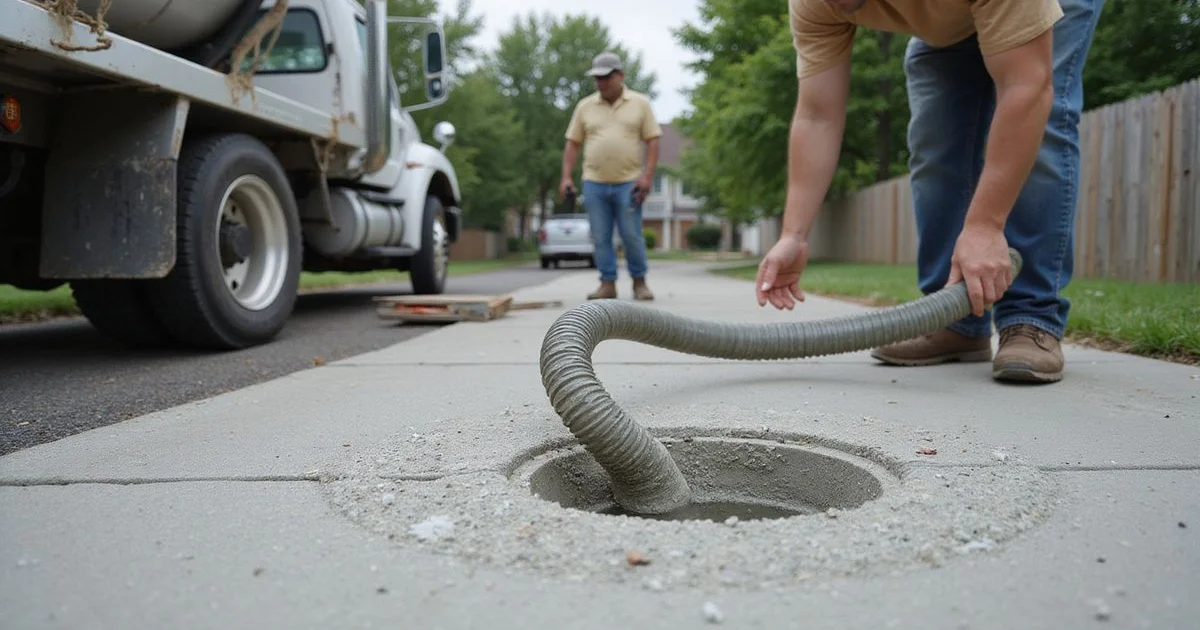
Many homeowners dealing with a sinking driveway spend hours researching the slab jacking best applications. We see this hesitation daily across Metro Detroit.
Replacing the concrete costs thousands. Simple foam injections often fail to support massive driveway loads over time.
Our limestone-foam hybrid process provides a permanent solution to this exact problem. This targeted approach combines the brute strength of traditional mud with the lifting precision of modern polymers.
Let’s review the data to see exactly where this method outperforms standard foam.
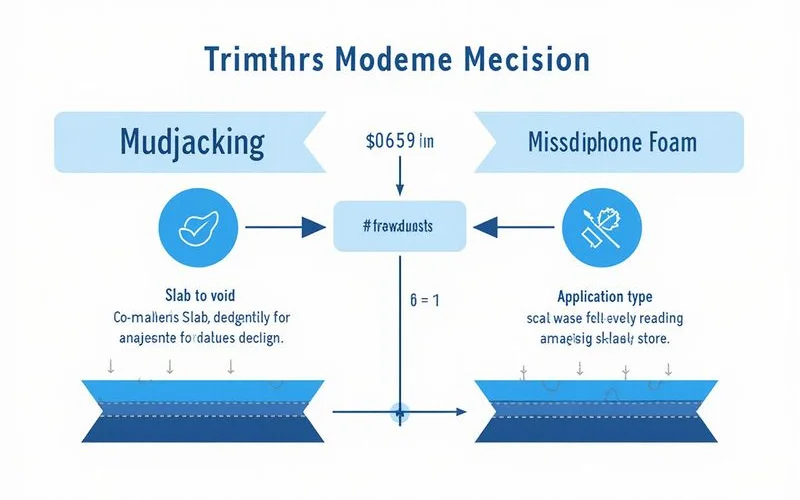
Slab jacking best applications: where the limestone hybrid wins
Slab-jacking with a limestone mix excels in environments that demand immense weight capacity and deep void filling. You will find this method outperforming pure foam in heavy-duty commercial zones and older clay-based neighborhoods.
Heavy slabs (driveway aprons, thick exterior pours)
Heavy slab leveling requires maximum compressive strength to survive daily vehicle traffic. Our limestone slurry achieves an incredible 2,400 PSI rating once fully cured.
Polyurethane foam typically maxes out between 80 and 100 PSI. That massive strength difference matters for thick exterior pours because:
- Delivery trucks exert immense pressure on the slab edges.
- Lightweight foam lacks the density to support 80,000-pound commercial vehicles.
- Traditional mud provides a rock-solid, concrete-like foundation.
We regularly see delivery trucks crack foam-lifted slabs when contractors ignore these weight limits. This makes traditional mud the clear winner for bearing heavy loads.
Deep voids requiring volume fill
Deep voids under your concrete demand a cost-effective bulk filling strategy. Filling a massive sinkhole entirely with polyurethane gets prohibitively expensive fast.
We track local material costs closely to protect your budget. Current 2026 pricing shows high-density foam costing 10 to 20 percent more than limestone slurry for basic jobs.
That price gap expands to 200 percent or more for deep voids requiring high-volume fills. Our crews solve this financial problem by deploying a hybrid approach.
Heavy dirt mix fills the empty space cheaply. A small layer of high-density foam then caps the repair to stabilize the slab.
Exterior commercial slabs
Exterior commercial slabs take a constant beating from heavy machinery and harsh weather. Industrial yards and warehouse aprons require specialized lifting materials to stay level.
We frequently repair Michigan parking lots where purely foam-based repairs have failed. The combination of heavy traffic and seasonal freezing pushes lightweight foam past its breaking point.
Frost heaves in the US Midwest routinely reach depths of 42 inches during severe winters. Our commercial-grade limestone mix resists this seasonal shifting much better than chemical alternatives.
This durability keeps loading docks and shipping lanes fully operational year-round.
Driveways with deep settling on clay
Severe driveway settling happens constantly in areas with expansive clay soils. Older properties in Wayne and Macomb County face major problems when the local clay shrinks during summer droughts.
We routinely encounter sunken driveways in these neighborhoods with two inches or more of drop. That level of settlement creates a serious tripping hazard and ruins the property’s curb appeal.
A heavy-duty limestone-foam hybrid pushes back against that stubborn Michigan clay. Our 2026 service records show this hybrid method lasts significantly longer on shrink-swell soils than pure foam.
| Feature | Limestone Slurry | Polyurethane Foam |
|---|---|---|
| Compressive Strength | Up to 2,400 PSI | 80 to 100 PSI |
| Material Weight | 100+ lbs per cubic foot | 2 to 4 lbs per cubic foot |
| High-Volume Cost | Highly economical | Very expensive |
When foam is preferable
Polyurethane injection provides the perfect solution for lightweight applications and moisture-prone areas. This rapid-curing foam expands quickly and leaves a tiny footprint.
Certain jobs strictly require a lighter touch. We exclusively recommend pure foam lifting for several specific residential situations.
The material weighs only two to four pounds per cubic foot. This makes it incredibly safe for delicate structures that cannot handle the 100-pound weight of traditional limestone mud.
Our technicians rely on high-density polyurethane for these distinct scenarios:
- Interior slabs (basement, garage): Basement floors and enclosed garages benefit from foam because it requires injection holes as small as 3/8 of an inch.
- Pool decks (water-resistant, light): The waterproof nature of polyurethane prevents future washouts around wet swimming areas.
- Weight-sensitive sub-bases: Fragile soils cannot support heavy cement slurry without sinking further.
- Tight access where limestone pumps don’t fit: Small foam rigs easily fit into backyards where bulky limestone trucks cannot reach.
You can review a complete breakdown of these specific use cases. See our where polyjacking wins guide for detailed examples.
Hybrid use (foam top, limestone bottom)
The hybrid leveling approach maximizes cost savings while delivering precise surface alignment. This technique combines the bulk filling power of limestone with the pinpoint accuracy of expanding foam.
Understanding when to use mudjacking versus foam saves you money. We deploy both materials on the same site to fix massive voids efficiently.
A deep sinkhole under a concrete slab needs structural support that makes financial sense. Using pure foam for a two-foot void wastes resources.
Our teams use the following sequenced approach to guarantee long-lasting results:
- Limestone-foam fills the deep void at the bottom (volume + stability): Heavy mud quickly handles the deep void at the bottom to provide cheap volume and solid stability.
- Polyurethane foam tops off near the slab (lift control + lightweight finish): A top layer of high-density foam provides perfect lift control and a waterproof finish near the slab.
Property inspections reveal exactly which method your concrete requires. We diagnose these complex soil issues on-site during your initial consultation.
Accurate pricing depends entirely on the void size and the materials needed. For more on the full comparison, see mudjacking vs polyurethane foam and our mudjacking service.
Restoring your sunken driveway protects your property value and prevents dangerous tripping hazards. We know that choosing the right method among the slab jacking best applications feels confusing at first.
The data clearly shows that heavy exterior slabs demand the brute strength of limestone. Lighter interior projects require the delicate touch of modern foam.
Our experts are ready to evaluate your specific concrete problems today. Request a free estimate to get a specific leveling plan.
Common Questions
Quick answers from our Metro Detroit crew.
What's a 'deep void'?
Can you combine the two?
More from this topic
What Is Slab-Jacking? The Limestone Method Explained
Slab-jacking history, our exclusive 100% limestone-and-foam hybrid (only-in-Michigan), grout slurry vs. foam, and where each shines.
Why Limestone Slab-Jacking Suits Michigan Soils
Michigan clay behavior, hydrostatic pressure, freeze-thaw resilience — why our limestone-foam hybrid outperforms traditional mudjacking locally.
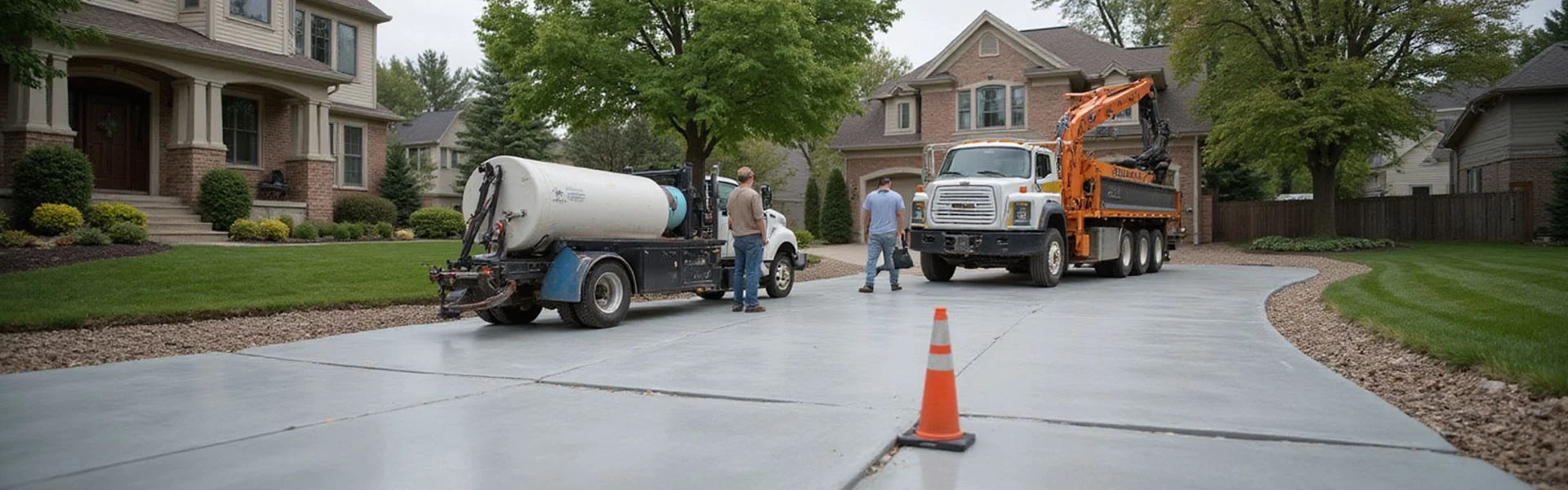
Have a slab to lift? Let's take a look.
Free, no-obligation on-site estimate. If we can't fix it, you don't pay.