Mudjacking vs. Polyurethane Foam Injection
Drill hole size, weight, cure time, and Michigan-soil suitability — compared. Plus our exclusive 100% limestone-and-foam hybrid.
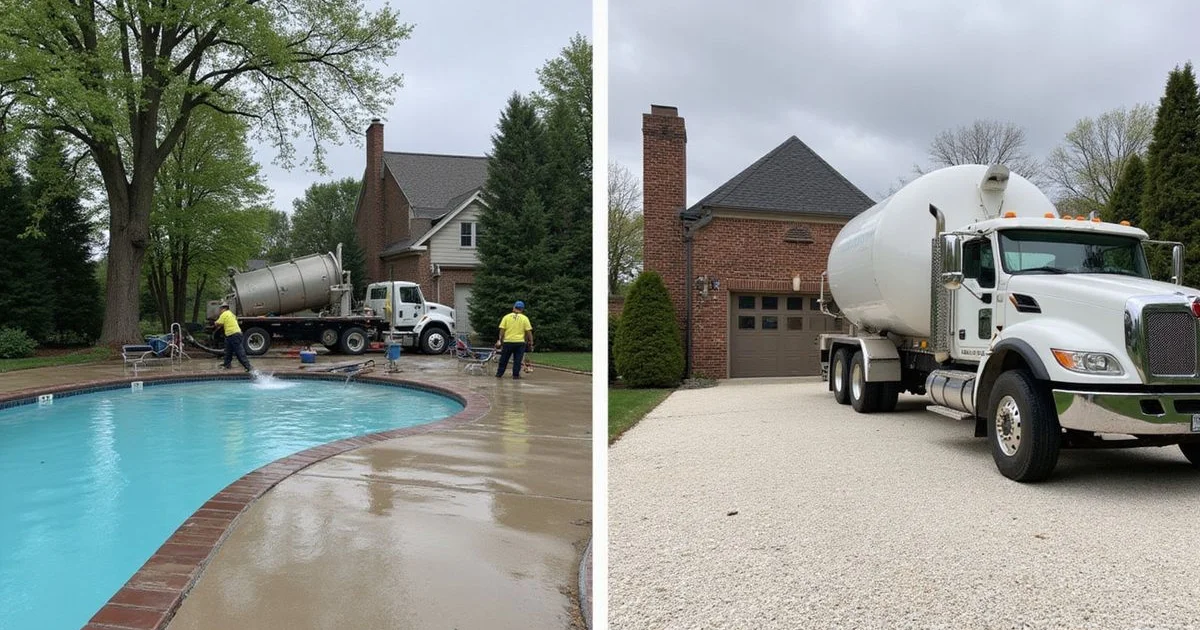
You likely notice sinking concrete long before it becomes a severe safety hazard.
That minor drop at the edge of a driveway is a clear indicator of underlying soil failure.
We see the mudjacking vs polyurethane foam debate confuse property owners on almost every project.
Both methods provide excellent results when applied in the correct environment.
Our 100% limestone-and-foam hybrid combines the strengths of both techniques to permanently stabilize unpredictable Michigan clay soils.
Let’s look at the hard data behind each method and explore exactly where they excel so you can make an informed decision.
Side-by-side comparison
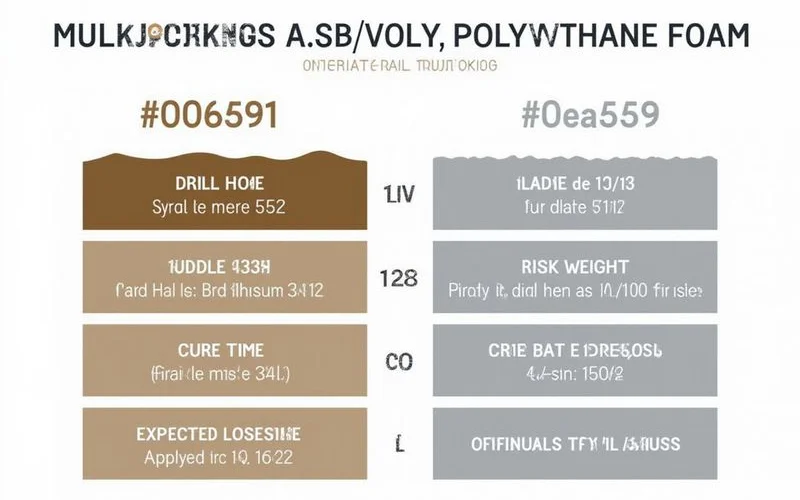
| Factor | Polyjacking (Foam) | Standard Mudjacking | Our Limestone-Foam Hybrid |
|---|---|---|---|
| Drill hole size | 3/8” (ours) | Traditionally 1.5-2” | 3/8” |
| Material weight | Lightweight | Heavy (slurry) | Medium |
| Cure / set time | ~15 minutes | Hours | Hours |
| Washout resistance (clay) | High | Low | High |
| Best slab type | Interior, pool deck | Heavy exterior | Heavy exterior, deep voids |
| Cost | Mid-high | Low-mid | Mid |
Industry averages from 2026 show that traditional mudjacking costs roughly $3 to $8 per square foot.
Polyurethane foam injection sits higher at $5 to $25 per square foot.
Our initial assessment always factors in these price differences when concrete lifting methods compared side-by-side.
Traditional slurry adds up to 100 pounds per cubic foot to your already stressed sub-base.
We prefer expanding foam for weight-sensitive areas because it weighs a mere 2 to 4 pounds per cubic foot.
This extreme weight difference usually dictates which method survives long-term on poor soil.
Where foam wins
Polyurethane resin is an incredible material that expands rapidly.
Our technicians inject the liquid through tiny, discreet holes that measure just 3/8 of an inch.
The mixture expands up to 30 times its original volume within 15 to 30 seconds.
We rely on this rapid expansion to force the concrete up with surgical precision.
In any polyjacking vs mudjacking analysis, cure time offers a massive advantage for busy properties.
Our crews can lift a sunken patio, and you can host a barbecue on it just 15 minutes later.
- Pool decks and lakeside slabs: Foam is completely water-resistant. It will not wash out under chlorinated or lakeside conditions.
- Interior slabs: Basements and garage floors benefit from the lightweight material. It prevents adding a heavy load to compromised sub-bases.
- Weight-sensitive applications: Light commercial slabs over older sub-bases require a gentle lift. Foam provides the necessary upward force without the extreme weight.
- Tight access: Small equipment easily fits into spaces where heavy slurry pumps cannot reach.
These specific benefits make foam the undisputed champion for residential interiors.
For more on the polyjacking side, see how polyurethane foam lifts concrete and our polyjacking service page.
Where mudjacking (especially our hybrid) wins
Standard mudjacking remains highly effective for specific load-bearing scenarios.
Our team regularly encounters deep voids where pure foam becomes cost-prohibitive.
Michigan soils are famously clay-heavy and absorb water easily.
We see this moisture trigger severe freeze-thaw cycles that heave and settle the ground underneath your slabs.
Traditional soil-cement mixtures often wash out under these harsh winter conditions.
Our crushed limestone alternative provides the dense, structural support needed to survive the changing seasons.
Concrete driveways demand a high compressive strength to support heavy vehicles.
- Heavy exterior driveways: A dense limestone matrix carries vehicle and equipment loads much better than foam alone.
- Deep voids: Crushed limestone fills large volumes affordably. Using pure foam gets very expensive on deep fills.
- Clay-heavy Michigan soils: Limestone resists washout in wet conditions where standard slurry-only mudjacking often fails.
- Commercial parking lots: Load-bearing capacity is paramount for warehouse floors and heavy traffic zones.
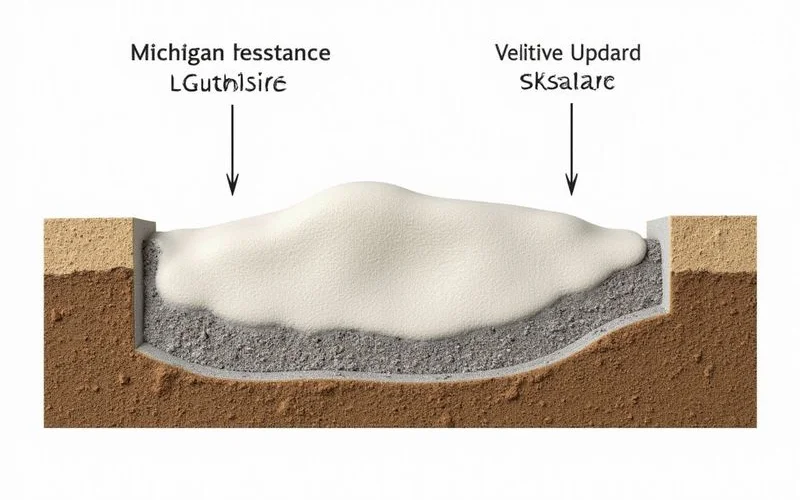
Heavy applications require a specialized approach to guarantee long-term stability.
For more on the slab-jacking side, see why limestone slab-jacking suits Michigan soils and our mudjacking and slab-jacking service page.
Why our 100% limestone-and-foam hybrid outperforms either alone
Pure foam struggles to build an affordable structural base in massive craters.
We replace the traditional soil component with 100% crushed limestone to create a superior base.
Standard mudjacking pumps a cheap soil-cement slurry that lacks precision and washes away easily.
Our unique method stabilizes the sturdy limestone mix with expanding polyurethane foam.
This specific hybrid approach is something no other Michigan crew runs.
We developed this technique to solve the dual problem of structural weakness and water erosion.
The result gives you the absolute best characteristics of both materials.
- Limestone delivers the immense load-bearing capacity that traditional slab-jacking is known for.
- Foam forcefully fills the microscopic irregularities and tiny gaps that a thick slurry alone misses.
- Together, the materials resist the intense clay-soil washout and harsh freeze-thaw cycles far better than either single method.
The Science Behind the Hybrid Process
Crushed stone provides immediate, non-compressible support for heavy concrete.
We then inject the expanding foam to act as a waterproof binder.
The foam expands rapidly to lock the limestone particles together and seal out moisture.
Our clients appreciate that this hybrid barrier prevents future settling caused by underground water movement.
Proper drainage and soil stabilization keep the concrete level for decades.
How we pick on-site
Every successful repair requires a precise diagnosis of the underlying soil failure.
Our field estimators start every job with a comprehensive, free on-site assessment.
A typical evaluation examines several crucial factors before mixing any materials.
- Slab type and weight load: A standard patio requires different support than a commercial loading dock.
- Sub-soil composition: Identifying clay, sand, or organic material dictates the necessary water resistance.
- Depth of settling and visible voids: Massive gaps demand affordable bulk fill, while minor drops need precision foam.
- Access and pump distance: Tight residential backyards often restrict heavy slurry trucks.
- Application context: Lakeside properties face constant water exposure that requires specialized waterproof materials.
Honest project scoping means you get exactly what your property needs.
We then recommend the right method based on the data, whether that is pure foam, limestone-foam, or a hybrid sequence.
True transparency ensures there are no surprise upsells during the project.
Our no-fix-no-charge guarantee protects you from paying for failed lifts.
You can Request a free estimate to get started, and an expert will walk your specific slab.
Common Questions
Quick answers from our Metro Detroit crew.
Which method lasts longer?
Are drill holes really smaller with foam?
Why a hybrid?
More from this topic
How Much Does Concrete Leveling Cost in Michigan?
Real Michigan concrete leveling prices by slab type and depth. See what drives cost, how it compares to replacement, and our no-fix-no-charge guarantee.
Concrete Leveling vs. Replacement: Which Is Right?
Compare concrete leveling vs. full replacement: cost, downtime, and when each makes sense in Metro Detroit. Honest guidance, no upsell.
Concrete Leveling vs. Foundation Repair: When You Need Each
Slab leveling addresses sunken concrete; foundation repair addresses structural settlement. A clear decision tree, with honest referrals when needed.
Have a slab to lift? Let's take a look.
Free, no-obligation on-site estimate. If we can't fix it, you don't pay.