What Is Slab-Jacking? (Limestone Method)
Slab-jacking history, our exclusive 100% limestone-and-foam hybrid (only-in-Michigan), grout slurry vs. foam, and where each shines.
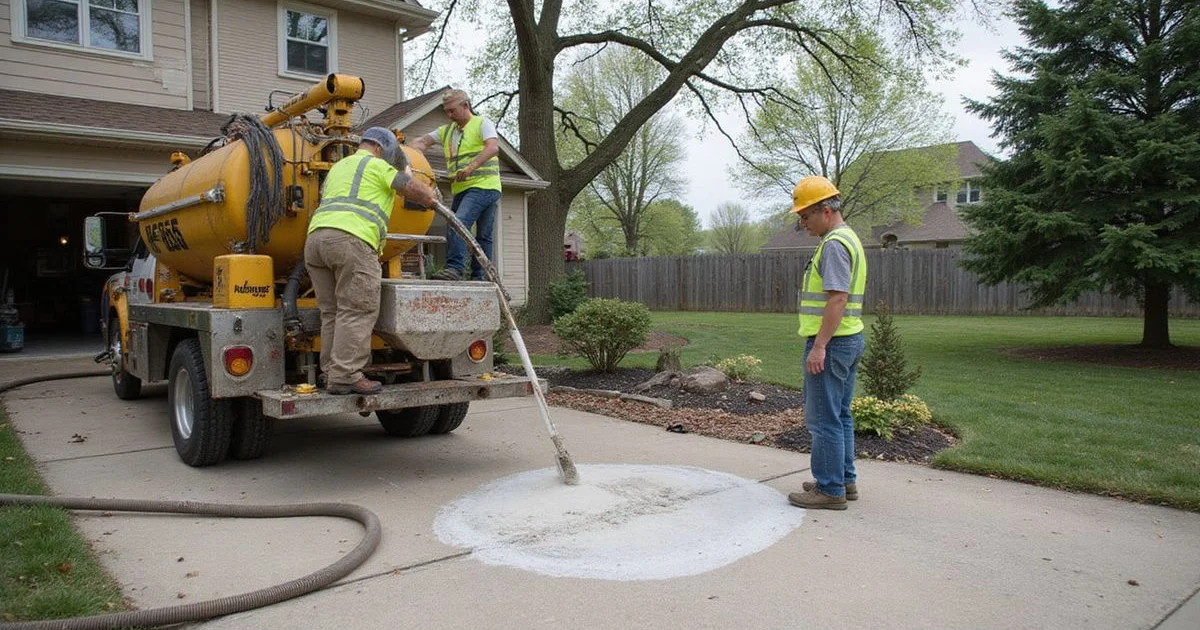
Our industry has provided a simple solution for sunken concrete for decades.
Current US data shows a sunken driveway often causes homeowners to panic about expensive replacements. The concrete leveling technique saves property owners thousands of dollars every single year.
We developed a modernized version of this classic method to improve longevity. This specific approach fixes the underlying issue at a fraction of the cost.
Frequent heavy rains make a permanent fix completely necessary.
A short history
Our crews know traditional slab-jacking works by pumping a slurry of soil and cement under the slab. Contractors developed this original method in the 1930s to lift settled concrete without tearing it out.
Installers historically forced the heavy slab back up through massive 1.5-inch to 2-inch holes, which is standard mudjacking explained in its simplest form. We understand that cure times for this old mud mixture often took a frustrating 24 to 72 hours.
This basic system functioned well enough for nearly a century in dry climates. The typical concrete replacement cost across the US currently sits between $3,000 and $7,000 for a standard patio.
The typical concrete replacement cost across the US currently sits between $3,000 and $7,000 for a standard patio, making affordable restoration methods essential.
Our experts identified a critical flaw with the traditional soil-cement slurry in regions with active freeze-thaw cycles. Michigan clay soils are particularly aggressive during the wet spring months.
The traditional slurry simply washes out around the heavy clay over a short five-year lifespan. We created a better system to stop this specific failure rate entirely.
Modern materials eliminate the weak points of the original 1930s design. Local homeowners deserve a repair that actually lasts.
Our exclusive process
Our exclusive process replaces the weak soil component of the slurry with 100% crushed limestone. Concrete Leveling Detroit is committed to delivering superior concrete restoration and leveling solutions for residential and commercial clients.
The structural rock mix creates a heavy base that standard water flow cannot wash away. We use a two-part chemical foam that expands up to 30 times its original liquid volume.
Technicians stabilize the initial limestone foundation with this modern polyurethane material. That massive expansion fills the microscopic voids that a traditional slurry completely misses.
Our customers can usually park their cars on the driveway the exact same day. The resulting limestone-foam combination offers distinct structural advantages:
- Crushed limestone resists washout from heavy Michigan clay sub-soil.
- High-density foam fills the small irregularities the slurry alone misses.
- Combined materials outlast either traditional method on its own.
- Installers drill through tiny 3/8-inch ports rather than ugly 2-inch holes.
This rapid 15-minute cure time provides immediate usability. We combined the extreme weight capacity of limestone with the waterproof nature of foam.
These smaller 3/8-inch injection sites patch cleanly and blend perfectly into the surrounding surface. Local competitors do not currently run this exact process.
Grout slurry vs. foam vs. our hybrid
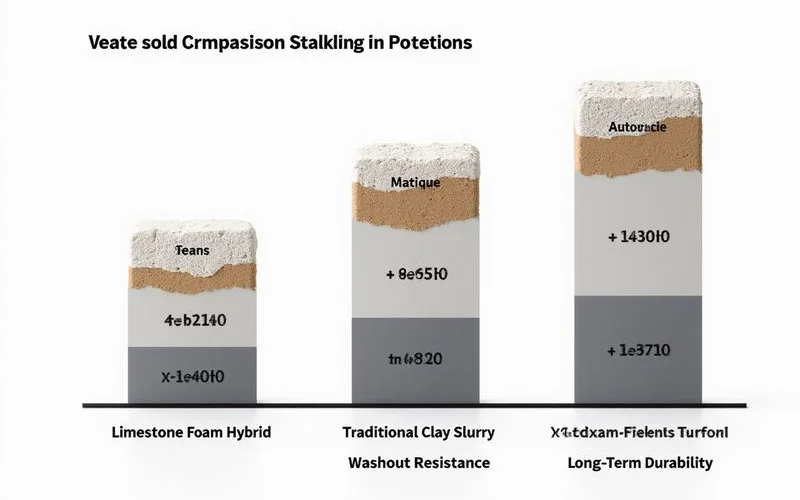
Our comparison below breaks down the technical differences between the three main options. Choosing the right repair method requires looking at objective performance limits.
Traditional mudjacking utilizes heavy materials that remain prone to water erosion. We combined the best traits of both formulas to create a highly resilient foundation.
Standard polyjacking is completely waterproof but very lightweight. The table highlights exactly why materials matter for long-term stability.
| Method | Material | Hole Size | Cure Time | Washout Resistance | Best For |
|---|---|---|---|---|---|
| Traditional mudjacking | Soil-cement slurry | 1.5 to 2 inches | 24 to 72 hours | Low (clay wash) | Drier soils |
| Polyjacking | Two-part polyurethane foam | 5/8 inch | 15 minutes | High | Interior, pool decks |
| Our hybrid | 100% limestone + foam | 3/8 inch | 15 minutes | High | Michigan clay, deep voids |
Where slab-jacking shines
Our process brings immense financial value to homeowners looking to avoid a $5,000 demolition bill. This specific repair method is highly effective for thick slabs carrying significant weight.
The high-density foam and limestone mix stabilizes the underlying soil permanently. We frequently use this approach to secure heavy exterior driveways.
Properly lifted concrete provides structural support that rivals a brand new pour. This hybrid formula shines brightest in the following applications:
- Commercial parking lots and heavy warehouse floors
- Deep voids hidden under settled concrete slabs
- Unlevel pool decks and sinking residential patios
- Areas affected by aggressive, clay-heavy Metro Detroit soils
Our team maintains a dedicated mudjacking and slab-jacking service page with further details. Homeowners looking for more specific data should see the complete guide comparing mudjacking vs polyurethane foam.
The final choice often comes down to specific weight loads and local drainage patterns. We assess these ground conditions carefully during every single property inspection.
These environmental factors determine the exact volume of material required for the job. Precise measurements prevent future settling from occurring again.
Why “mudjacking” is technically a misnomer
Our advanced process uses absolutely no soil or dirt at all. The traditional term comes from the old soil-cement slurry that looks exactly like thick mud.
The modern filler consists entirely of crushed limestone aggregate and a two-part expanding foam. We still answer to the name “mudjacking” because local customers know and search for that term.
These inert materials are completely impervious to water and structural degradation. The work completed today is actually far closer to limestone slab jacking or hybrid leveling.
The transition from mud to limestone and polyurethane represents the biggest advancement in concrete repair since the 1930s.
Our team is ready to inspect your property and explain the mechanical differences in person. Understanding what is slab jacking today means recognizing the permanent nature of this waterproof repair.
Property owners can easily Request a free estimate.
Common Questions
Quick answers from our Metro Detroit crew.
Why limestone instead of soil-cement slurry?
Is your process really exclusive?
More from this topic
Best Applications for Slab-Jacking (Where Mudjacking Wins)
Heavy slabs, exterior driveways, deep voids — where limestone-foam slab-jacking outperforms foam alone. Plus when to choose polyjacking.
Why Limestone Slab-Jacking Suits Michigan Soils
Michigan clay behavior, hydrostatic pressure, freeze-thaw resilience — why our limestone-foam hybrid outperforms traditional mudjacking locally.
Have a slab to lift? Let's take a look.
Free, no-obligation on-site estimate. If we can't fix it, you don't pay.