ADA Compliance for Detroit Business Concrete
ADA height thresholds, owner liability, and how leveling brings non-compliant slabs into spec — fast turnaround for Detroit retail and offices.
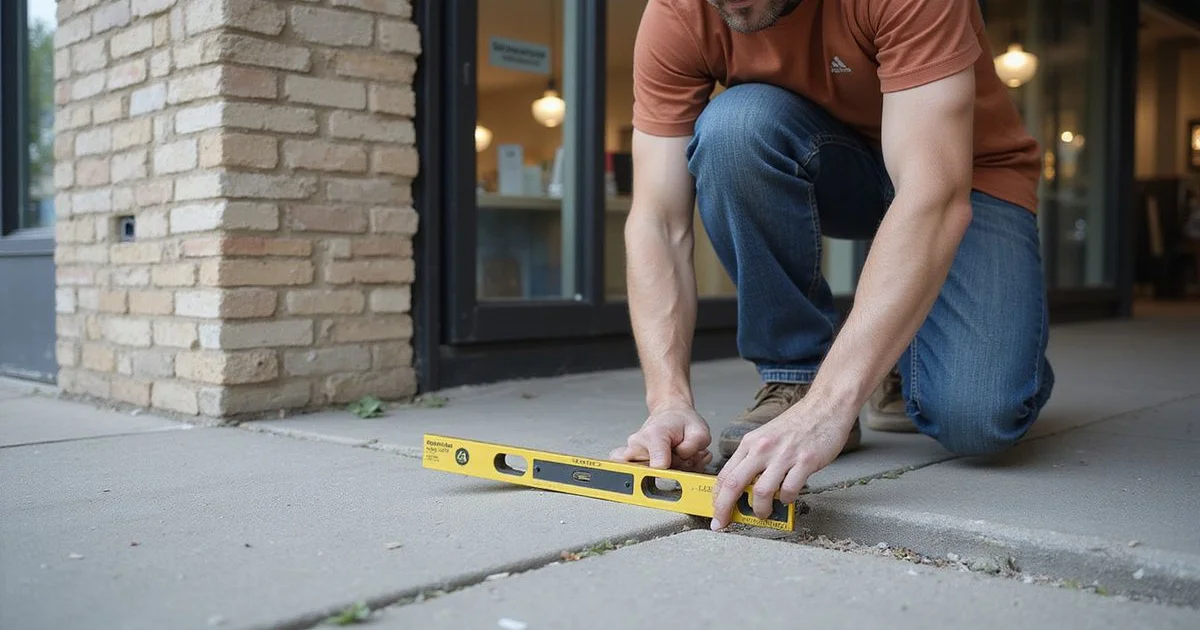
ADA compliance concrete trip hazard regulations require strict attention from anyone managing a property. You might be overseeing a retail center, or you might be one of the many homeowners dealing with sunken driveways, cracked patios, or unlevel pool decks who want to restore a safe walking surface.
Our team at Concrete Leveling Detroit is committed to delivering superior concrete restoration and leveling solutions for residential and commercial clients. Small changes in concrete elevation cause major problems.
We constantly see properties hit with violations because a simple sidewalk joint settled a fraction of an inch too far. According to Seyfarth Shaw legal tracking data, ADA Title III federal lawsuits remained near an all-time high with over 8,600 cases filed in 2025 alone.
Settlements routinely reach five and six figures.
We will outline the exact measurements that trigger a violation, explain the legal risks, and show how concrete leveling fixes the problem. Let’s review the data and explore a few practical ways to respond.
ADA compliance concrete trip hazard height thresholds (the rule)
The 2010 ADA Standards for Accessible Design strictly limit vertical changes in level to 1/4 inch. Any vertical offset exceeding this threshold is a violation.
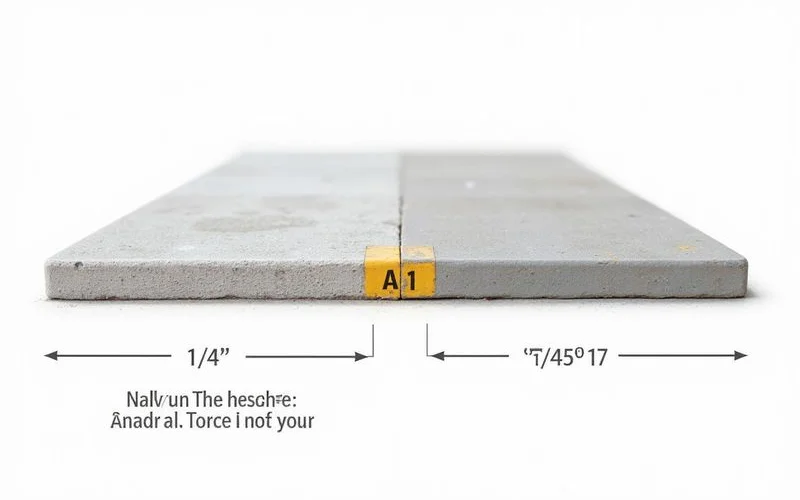
We rely on Section 303 of the ADA guidelines to determine exactly when a walkway needs repair. This code section applies to all walking surfaces in public-accommodation areas, including retail walkways, restaurant approaches, office building entrances, and hotel paths.
The specific measurements dictate the required response:
- Under 1/4 inch: Flush and fully compliant.
- 1/4 to 1/2 inch: Must be beveled at a 1:2 slope. A 1/4 inch height differential requires a bevel over a 1/2 inch length.
- Over 1/2 inch: Requires a curb ramp or full leveling correction.
Walkways with changes over 1/2 inch must be ramped with a maximum running slope of 1:12. You will find these strict limits apply regardless of whether the concrete settled due to weather or soil erosion.
Owner liability under federal and Michigan law
Owners face serious legal and financial exposure for non-compliant walkways under both federal law and the Michigan Persons with Disabilities Civil Rights Act. Defending against these claims often costs tens of thousands of dollars before a settlement is even reached.
We track accessibility trends closely to help clients mitigate these specific risks. The total volume of ADA Title III lawsuits filed in federal courts reached 8,667 cases in 2025.
Our data shows that private demand letters are even more common than formal court filings. Legal experts estimate that between 7 and 10 private demand letters are issued for every single claim that officially reaches a courtroom.
Legal exposure for non-compliance includes:
- Federal Title III claims resulting in private suits and attorney fees.
- Actions under the Michigan Persons with Disabilities Civil Rights Act.
- Slip-and-fall claims prosecuted under Michigan tort law.
- Significant brand damage from public safety violations.
Settlements typically run five to six figures. The cost of preventive leveling is a tiny fraction of a single claim.
How leveling brings slabs into spec
We lift the lower slab back to a flush state under 1/4 inch using a high-density limestone-foam injection. This specific method quickly restores the walking surface to full compliance.
Most retail or office walkway jobs finish overnight or in a single visit, ensuring no business closure. The polyurethane foam expands to fill the void space beneath the concrete and cures in approximately 15 minutes.
Our process allows property managers to return the walkway to full service almost immediately. Traditional cement mudjacking often takes several hours or even days to properly cure, which disrupts foot traffic and hurts retail sales.
For details on the leveling process, see trip hazard removal sidewalk leveling.
Comparing leveling methods clarifies the best choice for commercial properties.
| Feature | Limestone-Foam Injection | Traditional Mudjacking |
|---|---|---|
| Curing Time | 15 to 30 minutes | 24 to 48 hours |
| Hole Size | 5/8 inch | 1 to 2 inches |
| Disruption | Minimal (Same-day traffic) | High (Extended closure) |
Property manager audit checklist
Consistent property inspections are the only way to catch trip hazard liability commercial issues before they result in a lawsuit. You should schedule formal audits based on the foot traffic of your property.
We recommend following the Building Owners and Managers Association (BOMA) guidelines for exterior maintenance. Their best practices emphasize proactive checks to avoid the high expense of emergency repairs.
Essential Auditing Tools
Every property manager needs specific tools to accurately measure compliance. A standard tape measure is not precise enough to guarantee safety.
You must carry a 24-inch digital level to measure the running slope and cross slope of the pavement. The cross slope of an accessible route cannot exceed a 2.083% grade, which is a 1:48 ratio.
Our checklist ensures nothing is missed during a site walk. Visual inspections must be paired with accurate documentation.
- Walk every accessible route quarterly.
- Measure any visible vertical offsets with a steel ruler.
- Verify that standard accessible parking spaces feature an 8-foot width and a 5-foot access aisle.
- Document offsets over 1/4 inch with photos.
- Schedule leveling before claim exposure builds.
Fast-turnaround scheduling
Commercial properties need fast solutions that keep their doors open. Same-day on-site assessments and rapid repairs prevent prolonged safety risks.
We coordinate around your operating hours to eliminate downtime. Projects can be scheduled for overnight or weekend execution.
Our team delivers written ADA compliance documentation the moment the job is finished. You will have immediate proof that the property meets all safety standards.
Resolving an ada sidewalk business violation quickly protects your reputation and your bottom line. For Detroit retail and office property managers, the benefits include:
- Same-day on-site assessment.
- Overnight or weekend work to maintain operations.
- Precision lifting control within 1/8 of an inch.
- Written ADA compliance documentation post-job.
- Certificates of insurance available on request.
For commercial scope, see our commercial concrete leveling service and warehouse floor leveling guide.
Meeting ADA compliance concrete trip hazard requirements ensures your property remains safe and open.
Common Questions
Quick answers from our Metro Detroit crew.
What's the ADA threshold for trip hazards?
Do you document the work for ADA compliance?
More from this topic
Commercial Leveling vs. Replacement: Cost & Downtime
Total cost of ownership: job cost + downtime + lost productivity. Insurance considerations. Multi-phase scheduling. Detroit commercial.
Cost of Commercial Concrete Leveling in Michigan
Pricing factors: square footage, slab thickness, access, after-hours premium. Typical project ranges and RFP guidance for Detroit B2B.
Parking Lot Concrete Leveling: What to Expect
Detroit parking lot leveling — pre-job assessment, traffic-control plan, lift sequence, joint sealing follow-up, post-job inspection and warranty.
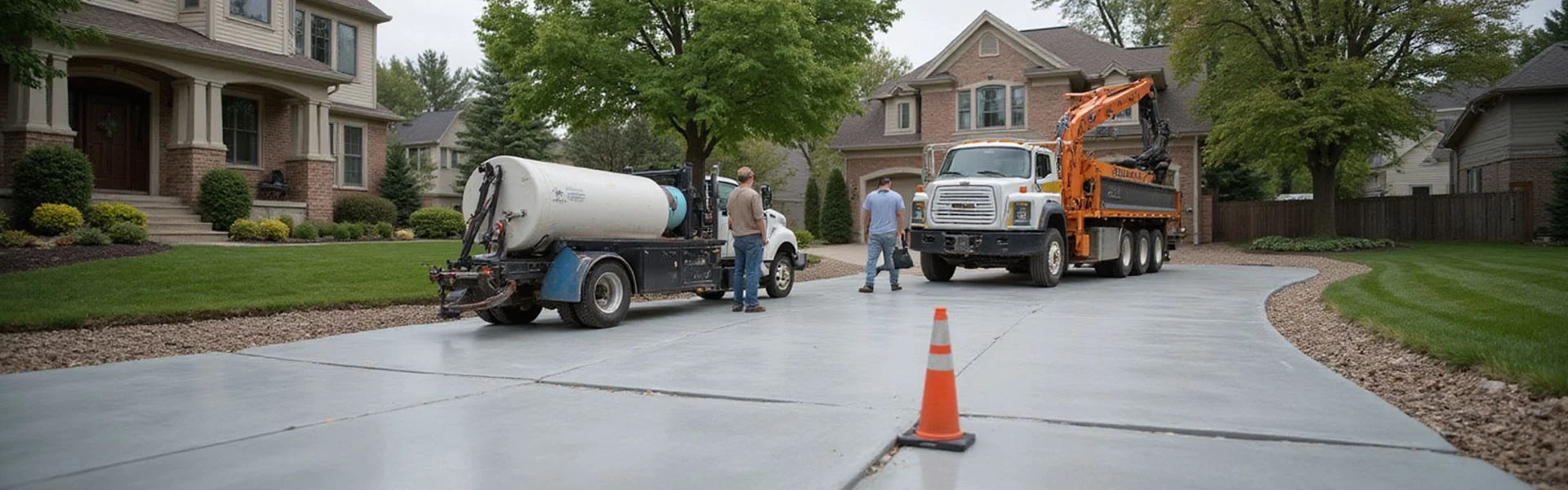
Have a slab to lift? Let's take a look.
Free, no-obligation on-site estimate. If we can't fix it, you don't pay.