Are You Liable for a Sunken Sidewalk?
Michigan property-owner liability basics for sunken sidewalks: slip-and-fall risk, insurance implications, and why timely leveling beats settlement exposure.
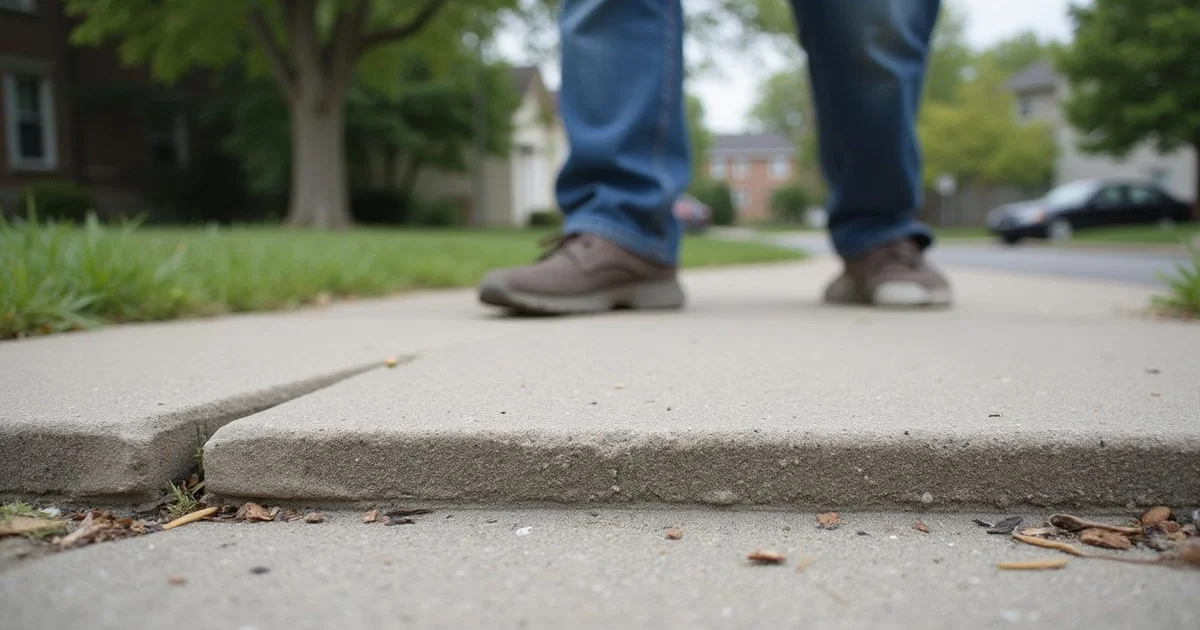
We know how frustrating a sunken sidewalk can be. It often feels like a confusing gray area between city responsibility and homeowner burden.
Our team sees this confusion every day across Metro Detroit. Homeowners usually assume the city will handle repairs.
That assumption can cost you dearly.
Under Michigan sidewalk law, the financial burden almost always falls squarely on the adjacent property owner once someone trips. We will walk you through the specific state codes, the real costs of sidewalk slip and fall liability, and practical steps you can take today.
Michigan property-owner duty basics
Most municipalities place a strict duty on the adjacent property owner to maintain the public walkway. You are usually the named defendant if someone trips on the sidewalk in front of your home.
We often hear clients cite the “Two-Inch Rule” to avoid responsibility. Michigan Compiled Law 691.1402a states that a city is only presumed liable if the vertical discontinuity defect is exactly two inches or greater. Everything under that two-inch mark becomes your problem.
Our Concrete Leveling Detroit team monitors these ordinances closely. Cities like Warren, Sterling Heights, Dearborn, and Livonia have local codes that shift this maintenance burden directly to the homeowner, making a quick review of your local ordinance essential.
The Impact of the Two-Inch Rule
Understanding the legal threshold is critical for your protection.
- Under 2 inches: The homeowner is generally fully liable for any injuries.
- 2 inches or more: The city might share liability, but you are still highly exposed through local municipal codes.
- 30-day notice: Cities are only liable if a plaintiff proves the city knew about the defect at least 30 days before the incident.
We always recommend measuring the gap yourself with a tape measure. This simple step gives you a clear picture of your exact legal exposure.
Slip-and-fall claim mechanics
A typical trip and fall claim in Michigan forces you to cover the victim’s medical expenses, lost wages, and pain and suffering damages. The financial impact extends far beyond a simple emergency room visit.
We review recent legal data to understand the true scale of these risks. Average slip-and-fall settlements in Michigan currently range from $30,000 to $150,000 according to 2026 legal guides. Severe injuries easily push those payouts into the six-figure territory.
Michigan follows a modified comparative negligence rule under MCL 600.2959. This means if the injured person is found to be 30 percent at fault for not watching their step, their payout drops by 30 percent. A judge will reduce the damages, but you still pay out a massive sum, which is why our goal is to help you avoid the courtroom entirely.
| Settlement Component | Typical Cost Impact |
|---|---|
| Medical Expenses | ER visits, surgery, and months of physical therapy. |
| Lost Wages | Compensation for the time the victim cannot work. |
| Pain and Suffering | Non-economic damages that multiply the base medical costs. |
| Legal Fees | The cost of defending yourself, which adds up fast. |
Insurance implications
Your homeowner’s insurance typically covers the slip-and-fall claim itself, but it completely ignores the cost of repairing the actual sidewalk. Insurance companies classify the concrete repair as standard property maintenance.
We frequently see homeowners surprised by their policy limits. Most standard liability policies cap out between $100,000 and $300,000. A severe injury claim can easily exceed that cap, putting your personal assets and savings directly at risk.
Filing a claim against your policy raises your premiums going forward. This rate hike happens regardless of whether the lawsuit actually settles or goes to trial.
Policy Breakdowns by Property Type
You need to know exactly how different policies handle these hazards.
- Homeowner’s insurance: Covers the injury claim but leaves you paying out of pocket for the concrete fix.
- HOA general liability: Covers walkway claims only for designated common-area sidewalks, not the strip directly in front of your private lot.
- Commercial general liability: Covers retail and office trip-hazard claims, usually accompanied by deductibles in the thousands of dollars.
Our advice is to check your liability limits before an accident happens. A quick call to your agent clarifies exactly where you stand.
Why timely repair beats settlement exposure
Fixing the hazard immediately eliminates your risk entirely for a fraction of the cost of a lawsuit. Proactive maintenance is always cheaper than hiring a defense attorney.
We track local repair costs to provide accurate expectations. Recent 2026 data shows that polyurethane concrete leveling in Detroit costs between $5 and $25 per square foot. A typical residential sidewalk leveling job runs about $400 to $1,500 total.
This preventive repair is dramatically cheaper than a $50,000 injury settlement.
The Polyurethane Advantage
Modern leveling methods offer massive benefits over outdated techniques.
- Cost-Effective: Polyurethane foam leveling costs about one-third the price of a full tear-out and replacement.
- Incredibly Fast: The job takes hours of work rather than months of stressful litigation.
- Instant Use: The lightweight foam cures fast, allowing foot traffic on the sidewalk within hours.
- Permanent Fix: The foam stabilizes the loose soil beneath the slab to prevent future sinking.
We use these advanced methods to permanently remove the hazard. Removing the trip hazard today protects your savings tomorrow.
Documentation tips
Proper documentation proves you took proactive steps to eliminate the hazard before an accident happened. You need clear evidence showing the state of the sidewalk before and after the repair.
We tell all our clients to photograph the trip hazard before any work begins. Place a tape measure next to the gap to clearly show the height differential. This specific measurement proves whether the defect was under the two-inch legal threshold.
Keep the contractor’s written quote and the detailed post-job report in a safe place. Filing these records with your insurance company demonstrates proactive risk management on your part.
Best Practices for Property Managers
Commercial owners and HOA boards carry even higher burdens of proof.
- Log all resident complaints about uneven walkways immediately.
- Document the approved repair work in official board meeting minutes.
- Retain the final invoice alongside the dated post-job photos.
For commercial property, see our ADA compliance for Detroit businesses guide and sidewalk leveling service page.
Our crews always provide the necessary paperwork to protect your liability.
What to do if you spot a hazard
You must document the gap and schedule a professional repair immediately. Waiting for the city to fix it just leaves you exposed to a devastating lawsuit.
We recommend acting fast the moment you notice a sunken slab.
- Photograph and document the height differential with a visible tape measure.
- Request a free estimate and we will measure the site officially.
- Schedule the lift using polyurethane foam before someone trips.
- File the post-job documentation directly with your insurance agent.
Same-day Metro Detroit dispatch, BBB A+ accredited, no fix no charge.
Secure Your Sidewalk Today
Understanding Michigan sidewalk law is the first step to protecting your savings. A sunken walkway is a serious financial liability, but it is completely solvable.
We are ready to restore your concrete and your peace of mind. Taking action now protects your property value and eliminates your legal exposure.
Reach out to our team to schedule your professional leveling service today.
Common Questions
Quick answers from our Metro Detroit crew.
Is the homeowner or city liable?
Will my homeowner's insurance pay for repair?
More from this topic
Common Causes of Uneven Sidewalks in Michigan
Tree-root upheaval, soil washout, freeze-thaw, base failure — the four real causes of Metro Detroit sidewalk damage. Plus what's fixable by leveling.
Cost of Sidewalk Leveling in Michigan
Real Michigan sidewalk leveling prices by job size. Residential vs. commercial factors, free assessment, no-fix-no-charge guarantee.
Sidewalk Leveling vs. Replacement: Cost Compared
Per-linear-foot leveling vs. replacement cost, downtime, and when replacement is required (heavy spalling, municipal permits).
Have a slab to lift? Let's take a look.
Free, no-obligation on-site estimate. If we can't fix it, you don't pay.