Why Is My Driveway Sinking?
Soil washout, poor compaction, tree roots, clay shrinkage — the real reasons Metro Detroit driveways sink, and what's fixable by leveling.
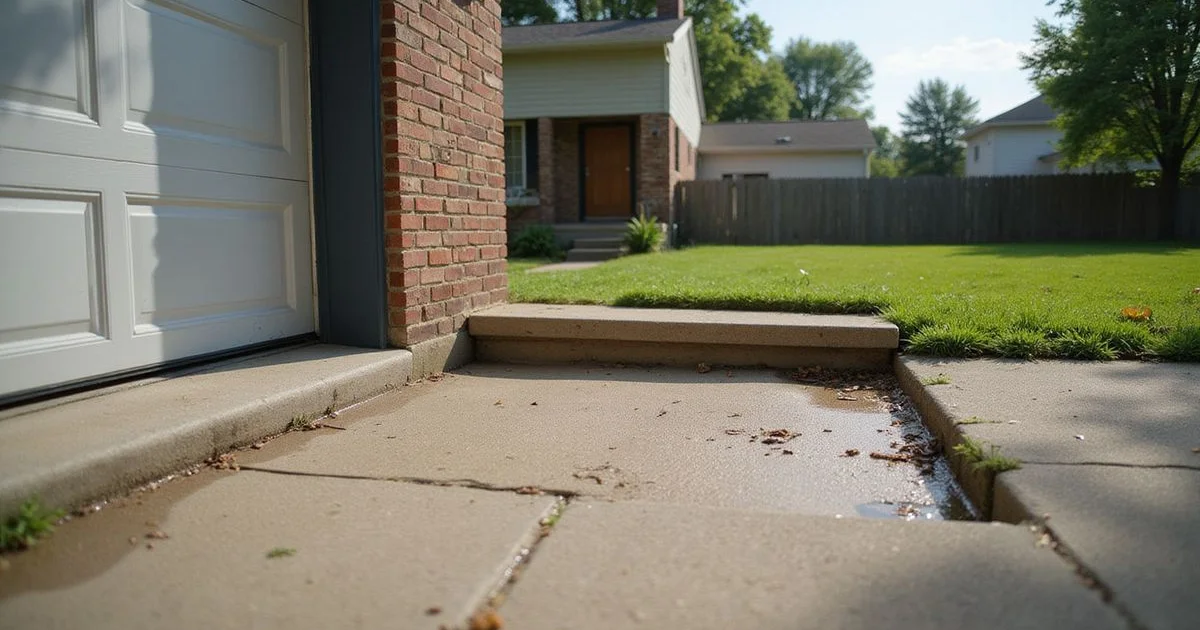
We often see homeowners completely stumped when their concrete starts dropping. You probably noticed a small lip at the garage threshold last year.
Our team at Concrete Leveling Detroit knows this sinking feeling all too well.
If you find yourself asking why is my driveway sinking, the answer involves a mix of local weather and heavy soil. We will break down the five main reasons this happens across the metro area.
Let’s look at the data and explore a few practical ways to fix the problem.
1. Soil washout from poor drainage
Water flowing under the concrete simply carries the supporting dirt away. Our crews frequently find that downspouts discharging too close to the concrete are the main culprit.
This process leaves empty space beneath the surface, causing the heavy slab above to cave in. We see this constantly after heavy spring storms in the Midwest.
Common drainage failures that wash out sub-soil include:
- Blocked or leaking underground sprinkler lines.
- Downspouts ending less than five feet from the slab.
- Soil sloping directly toward the concrete edge.
Detroit averages about 39 inches of precipitation every single year. Our local experts know that May is usually the wettest month, dumping nearly 4 inches of rain on properties.
Reverse-graded landscaping also pushes surface water directly under the driveway. We often measure underground voids that have grown several inches deep before a surface crack ever appears.
2. Poor original compaction
Loose dirt placed before pouring the concrete will eventually compress under the weight of the slab. We run into this issue frequently on older driveways poured a decade or two ago.
Heavy clay soils, common throughout Wayne and Macomb counties, require mechanical tamping before pouring. Our experience shows that many older subdivisions skipped this crucial construction step.
Proper sub-base compaction is the foundation of any lasting concrete pour, yet it is a frequently rushed step in residential construction.
Settling usually becomes obvious within 5 to 15 years after the original pour. We often find that the concrete itself remains perfectly solid during this dropping process.
The actual failure happened below the surface on day one. Our leveling techniques correct this original oversight without replacing the strong concrete on top.
3. Tree-root upheaval and shrinkage
Aggressive roots pull massive amounts of water out of the surrounding dirt. Our technicians deal with this root-driven damage in historic neighborhoods every single week.
The dried clay shrinks rapidly, creating a hollow void that lets the concrete drop.
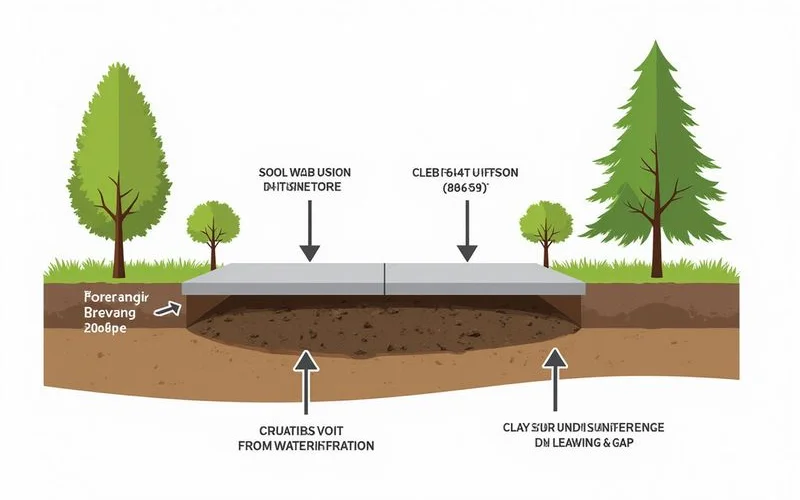
We specifically watch out for several species notorious for seeking moisture under pavement:
- Silver Maples (often planted in older subdivisions)
- Norway Maples
- Large Oak varieties
Local arborists report that maples make up roughly 40 percent of the street trees in Detroit. Our crews see how these thirsty giants will completely dehydrate the ground during dry summer stretches.
Filling the underground void stabilizes the area without harming the root system. We have found that lifting the concrete is almost always a better choice than cutting down a beautiful old tree.
4. Clay shrinkage from drought-saturation cycles
Clay dirt swells up like a sponge during spring rains and shrinks during summer droughts. We consider this expansion cycle a classic problem for homes in Wayne and Macomb counties.
Regional soil maps show these areas are completely dominated by heavy, moisture-retaining clay. Our technicians literally watch concrete slabs move up and down as the seasons change.
Clay soils can expand by up to 10 percent in volume when wet, creating massive pressure against rigid concrete surfaces.
The soil can lose a massive amount of volume when August temperatures peak. We use specialized leveling material to fill the gaps created during this dry phase.
This prevents the driveway from cracking when the rain eventually returns. Our approach breaks this destructive cycle once and for all.
5. Freeze-thaw void formation
Trapped ice expands under your driveway, pushing the dirt away before melting into an empty pocket. We prepare for this specific damage every year during the unpredictable Michigan winter.
Recent climate studies show southeastern Michigan typically experiences three to five major freeze-thaw cycles per season. Our weather tracking indicates a trend toward fewer deep freezes but more rapid temperature swings.
This constant freezing and melting creates specific damage patterns:
- Widened and crumbling control joints
- Surface flaking near the slab edges
- Uneven stepping between individual concrete panels
These cycles are absolutely terrible for unsealed concrete joints. We highly recommend sealing your expansion joints to block surface moisture from getting below the slab.
Keeping water out is the best way to prevent winter soil erosion. Our joint sealing service pairs perfectly with leveling to stop future movement.
Michigan-specific factors
Local geography plays a massive role in how quickly your driveway degrades. We compiled a breakdown of the most common sunken driveway causes based on specific regional traits.
| Local Factor | High-Risk Areas | Primary Impact on Concrete |
|---|---|---|
| Heavy Clay Soil | Wayne & Macomb Counties | Amplifies drought shrinkage and swelling cycles. |
| High Water Tables | St. Clair Shores, Harrison Township | Accelerates fast soil washout beneath slabs. |
| Aging Tree Canopies | Historic Detroit, Dearborn | Triggers severe root upheaval and moisture theft. |
The unique environments across the metro area trigger very different types of damage. We constantly adjust our repair strategies to account for these local variables.
Understanding the specific ground conditions under your home ensures a permanent fix. Our regional expertise guarantees the right material goes into the ground every time.
What’s fixable by leveling
Professional lifting corrects almost every type of settlement issue discussed above. We stabilize the compromised dirt using an advanced limestone and foam hybrid material.
Angi reports that standard concrete replacement costs between $8 and $15 per square foot in 2026. Our leveling services typically save homeowners 50 to 70 percent compared to pouring a brand new driveway.
The restored slab regains proper drainage flow almost immediately after the injection. We also know that combining this repair with proper joint sealing stops future freeze-thaw damage.
When Replacement is Required
Some damage is simply too severe for a lifting procedure. We always inspect slabs for underlying structural failures before quoting a job.
The following issues will require a completely different approach.
- Shattered Slabs: Concrete cracked completely through the internal steel reinforcement requires full replacement.
- Surface Deterioration: Heavy spalling, crumbling faces, and missing chunks cannot be repaired with foam.
- Active Foundation Shifting: Sinking that pulls the driveway down alongside a moving house requires dedicated foundation repair.
Our team wants you to make the most cost-effective choice for your property. You can explore the full financial breakdown in our driveway leveling vs replacement guide.
We also outline our complete process on the main driveway leveling service page.
Spotting the cause before calling
Visual clues on your property will often reveal exactly what is happening below ground. We ask homeowners to perform a quick visual inspection before booking an appointment.
Look for these specific warning signs around your property.
- Pooling water near the foundation: Indicates a severe drainage failure.
- Slab edge dropping near the garage threshold: Points directly to soil washout.
- Step-down at slab joints: Suggests freeze-thaw void formation.
- Cracks parallel to a nearby tree: Highlights root-related shrinkage.
- Slab sloping back toward the house: Reveals widespread clay shrinkage.
Our field estimators find that most Metro Detroit driveways actually show two or three of these symptoms at once. A comprehensive inspection is the only way to accurately diagnose complex settlement issues.
We diagnose all of them on-site and pick the exact right method for your soil type.
You can request a free estimate to get a professional opinion. Our experts will walk your driveway and explain exactly how to restore it.
Common Questions
Quick answers from our Metro Detroit crew.
Will a sinking driveway get worse?
Can tree roots cause sinking?
More from this topic
Cracked vs. Sunken Driveway: Choosing the Right Fix
Hairline crack? Through crack? Settling? Diagnose your Metro Detroit driveway and pick the right repair: leveling, joint sealing, or replacement.
The Driveway Leveling Process Step-by-Step
Walk through a real Detroit driveway leveling job: assess, drill, inject, patch, drive on it tonight. 4 steps, 2-6 hours, no demolition.
Driveway Leveling vs. Driveway Replacement
Cost gap, downtime, and when replacement is the right call. Plus how to handle a driveway with both surface cracks AND settling.
Have a slab to lift? Let's take a look.
Free, no-obligation on-site estimate. If we can't fix it, you don't pay.