Why Concrete Sinks in Michigan
Michigan clay, hydrostatic pressure, freeze-thaw cycles — the real reasons your driveway is sinking, and how sub-base stabilization stops it.
Our technicians at Concrete Leveling Detroit hear the same frustration from homeowners every spring about uneven driveways and trip hazards.
When locals ask why does concrete sink, Michigan weather and soil provide very predictable answers.
Most of these issues trace back to the exact same culprits, which are clay-heavy dirt and extreme temperature shifts.
We see this constant cycle cause major headaches, but understanding the physics makes the fix obvious.
Once you know what to look for, you can stop settling from happening again.
Let’s look at the data, what it is actually telling us, and explore a few practical ways to respond.
1. Michigan clay-heavy soil
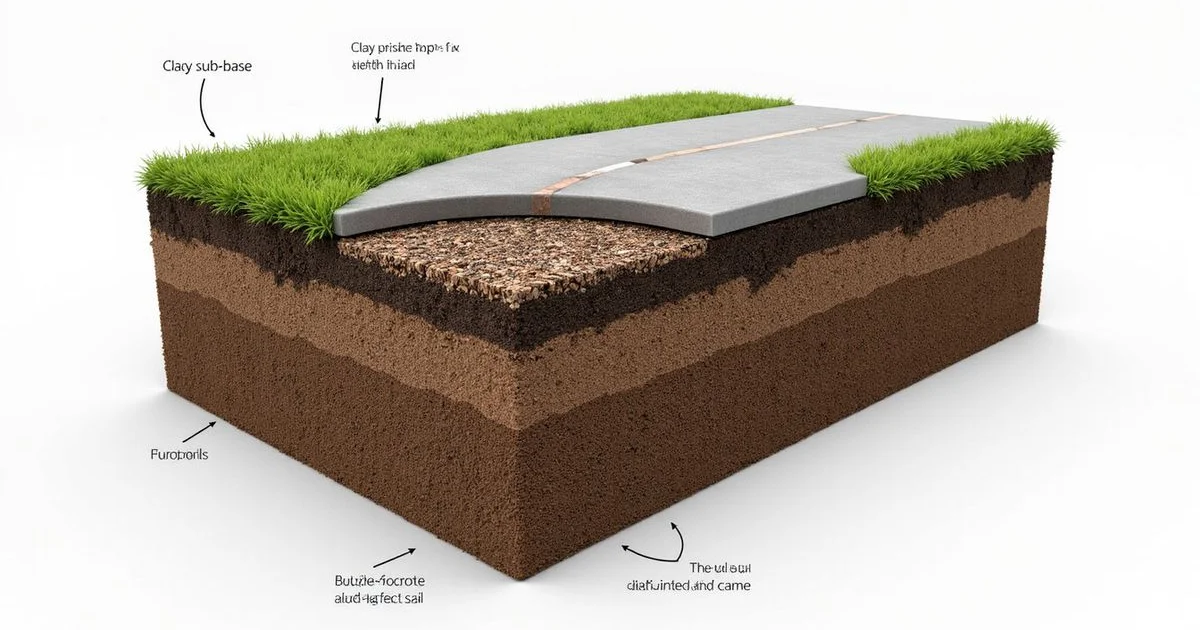
The primary reason your driveway sinks is the ground underneath it. Most of Wayne, Macomb, and Oakland counties sit on expansive montmorillonite clay.
We find this specific type of material acts like a giant sponge. When dealing with Michigan clay soil, concrete inevitably faces a serious structural threat.
It causes two major problems for heavy slabs:
- Expands when wet, contracts when dry. A wet spring followed by a hot summer can shift a slab by half an inch.
- Holds water poorly. Saturation washes out fines, leaving deep voids under the concrete.
Our team frequently sees traditional mudjacking fail here because of sheer weight. Traditional mudjacking slurry weighs up to 150 pounds per cubic foot, which adds massive stress to already weak clay.
We prefer lightweight limestone-and-foam hybrids because they weigh just 2 to 4 pounds per cubic foot. This modern material resists washing out and will not overburden your soil.
2. Freeze-thaw cycle physics
Winter weather is the leading cause of freeze thaw concrete damage in the Midwest. Water that gets into a slab joint freezes and expands by about 9 percent, creating thousands of pounds of pressure per square inch.
We track local weather patterns, and regional data shows that Michigan actually experiences 30 to 60 freeze-thaw cycles annually. That constant “rollercoaster” winter temperature swing pushes joints apart from below and breaks the bond between the sealant and the concrete.
Our inspections reveal that over a decade, these repeated cycles will cause severe damage.
- Crack open joints that were once tightly sealed
- Wash out sub-soil under the slab
- Form voids that lead directly to settling
This relentless cycle is why joint sealing every 5-10 years is the single most cost-effective preventive measure for Michigan slabs.
3. Hydrostatic pressure
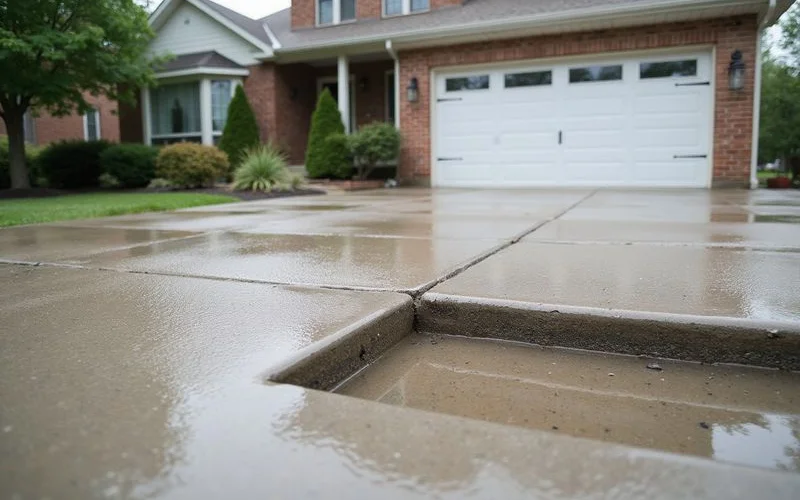
Groundwater pushing up against your concrete from below is known as hydrostatic pressure. Lakeside Macomb communities like St. Clair Shores and Harrison Township face this constantly due to a high water table from their proximity to Lake St. Clair.
We see this upward force erode the sub-soil and create voids much faster than inland communities experience. The constant presence of moisture means the ground never truly stabilizes.
Our crews often get called to lakefront properties to fix specific high-risk areas. Pool decks, seawall slabs, and patios near the water require much more frequent leveling.
Here are the most vulnerable waterfront concrete surfaces:
- Seawall access walkways and borders
- Backyard pool decks and coping
- Patios sloping directly toward the water
We highly recommend specialized water-resistant foam for these exact locations. The hydrophobic nature of modern leveling materials ensures the repair actually survives the wet environment.
4. Drainage failure and soil washout
Improper water routing is the fastest way to ruin a perfectly good driveway or patio. A slow leak washes sub-soil out from under the slab over several months, eventually leaving a void inches deep by the time the surface visibly settles.
We always check the gutters first during a residential inspection. A standard 1,600-square-foot roof sheds nearly 1,000 gallons of water during a single one-inch rainstorm.
Our technicians routinely find that all this water is dumping straight into the foundation soil. Common drainage culprits include the following issues:
- Downspouts dumping next to the foundation instead of further away
- Sprinkler systems leaking at underground fittings
- Reverse-graded landscaping pushing water back toward the slab
- Pool plumbing leaks under the concrete coping
We advise homeowners to check these systems every single spring. Fixing a simple gutter extension can literally save your concrete from catastrophic failure.
Why sub-base stabilization matters more than surface repair
Fixing the root cause beneath the concrete is the only way to ensure a permanent repair. Lifting the slab is just the visible part of the work, but filling the void underneath is the part that prevents the slab from sinking again.
We firmly believe that treating the symptom without fixing the soil is a waste of your money. This is exactly why our process always includes thorough void inspection and filling alongside the actual leveling.
Our teams pump a specialized limestone-foam hybrid into both the empty void and the lift zone simultaneously. This method stabilizes the weak sub-soil while gently restoring the heavy slab back to its original grade.
To understand the difference, look at how modern materials compare to old methods:
| Material Type | Weight Impact | Moisture Resistance |
|---|---|---|
| Traditional Mudjacking | 100 to 150 lbs per cubic foot | Prone to washing out over time |
| Limestone-Foam Hybrid | 2 to 4 lbs per cubic foot | Highly hydrophobic and waterproof |
We invite you to learn the exact details of this technique. For more on void filling specifically, see our void filling guide and void filling service page.
What you can do to slow it down
Proactive maintenance is your best defense against expensive concrete replacement. You can actively extend the lifespan of your slabs by managing water flow and sealing vulnerable gaps.
We recommend a few simple weekend projects to protect your property. Taking these steps will drastically reduce the chances of severe settling.
Preventive Maintenance Checklist
- Seal your joints every 5-10 years. Use a high-quality polyurethane caulk like Sikaflex to keep water out of the sub-base.
- Re-grade landscaping. Ensure dirt and mulch slope away from slabs at a drop of about 1/4 inch per foot.
- Move downspout discharge away. Route water at least six feet from the foundation using extensions, splash blocks, or buried drain lines.
- Annual walkthrough. Check for early signs of settling before the damage accelerates.
We offer professional assessments if you spot any of these warning signs. If your slab is already showing signs of settling, request a free estimate.
We will diagnose the underlying cause and quote the right fix on-site.
Common Questions
Quick answers from our Metro Detroit crew.
Does every Michigan driveway eventually sink?
Will sealing my joints stop sinking?
More from this topic
How Much Does Concrete Leveling Cost in Michigan?
Real Michigan concrete leveling prices by slab type and depth. See what drives cost, how it compares to replacement, and our no-fix-no-charge guarantee.
Concrete Leveling vs. Replacement: Which Is Right?
Compare concrete leveling vs. full replacement: cost, downtime, and when each makes sense in Metro Detroit. Honest guidance, no upsell.
Concrete Leveling vs. Foundation Repair: When You Need Each
Slab leveling addresses sunken concrete; foundation repair addresses structural settlement. A clear decision tree, with honest referrals when needed.
Have a slab to lift? Let's take a look.
Free, no-obligation on-site estimate. If we can't fix it, you don't pay.