What Are Voids Under Concrete?
How sub-slab voids form (washout, decay, settlement), why they're dangerous (collapse risk), and how we detect them — all before lifting.
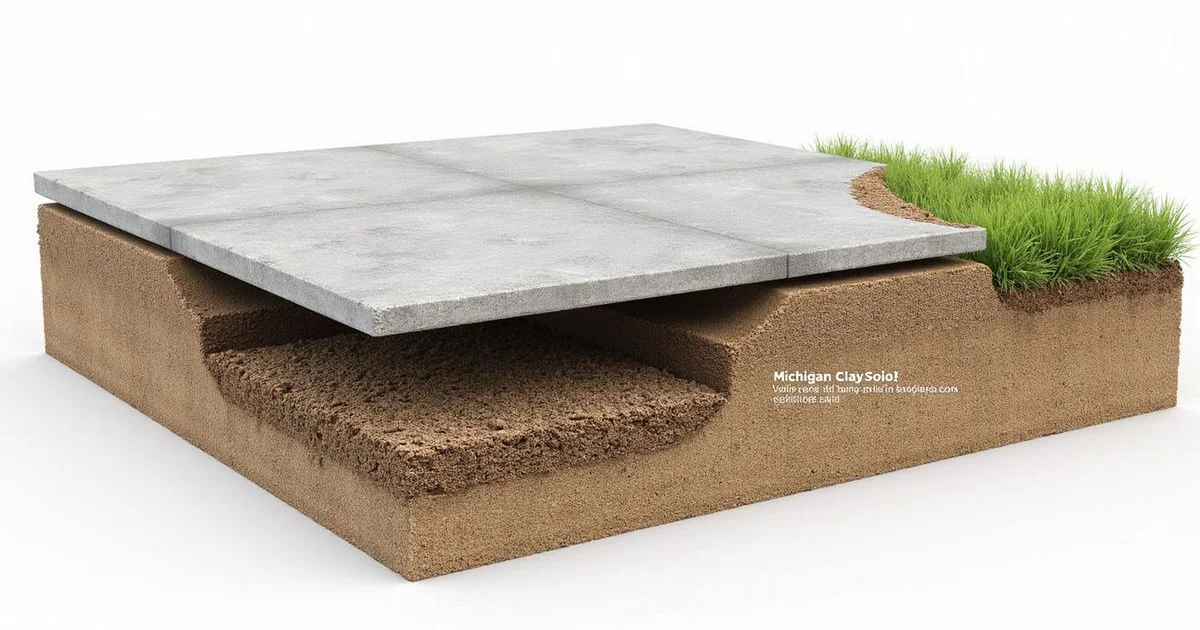
From what we see out in the field, sunken concrete is almost always a surface symptom of a much deeper issue. You might assume the slab itself failed, but the real culprit is usually an empty pocket of missing soil.
A void under concrete is exactly what it sounds like: an empty space between the slab and the sub-soil that should support it. Our team at Concrete Leveling Detroit focuses entirely on delivering superior concrete restoration for these exact situations.
Let’s look at the data behind these empty spaces, explore how they form, and lay out a practical plan for fixing them.
How voids form
Concrete void formation happens when the soil beneath a slab washes away, settles, or degrades. This leaves an empty pocket where compacted dirt used to be. We frequently see this occur due to intense weather conditions and poor water drainage.
According to 2025 data from the American Concrete Institute, over 66% of structures in the US rely on concrete, and poor drainage is a leading cause of soil displacement beneath them. The problem starts with water. Underground utility lines can develop minor leaks. These leaks create tiny piping channels that wash away the finest soil particles.
The most common triggers for these empty spaces include:
- Soil washout: Active water from drainage failures, pooling rainwater, or plumbing leaks physically removes the dirt.
- Decay of organic material: Buried tree roots or debris in the original sub-base break down over time.
- Improper compaction: The initial sub-soil settles if builders fail to tamp it down sufficiently before pouring.
- Hydrostatic erosion: Lakeside properties face constant pressure from moving groundwater.
In Metro Detroit, the primary culprit is the local freeze-thaw cycle combined with expansive clay soil. Water in the ground freezes and expands by about 9% during winter. Spring arrives, the ice melts, and the clay soil shrinks back.
We track these seasonal changes closely because they leave behind massive gaps under driveways and patios. Property owners should always ensure gutters discharge water at least five feet away from any concrete surface to minimize this erosion.
Why voids under concrete are dangerous
Voids under concrete are dangerous because they force the slab to act like an unsupported bridge. This lack of foundation quickly leads to severe cracking and structural collapse. Our technicians regularly inspect slabs that look fine on the surface but are completely hollow underneath.
Concrete possesses incredible compressive strength, but it is notoriously weak in tension. Heavy loads easily exceed that tension limit when there is no compacted dirt below. A 2025 engineering analysis by Foundation Systems highlights that ignoring a sunken slab dramatically increases the rate of water infiltration, which accelerates further soil washout.
The main threats to your property include:
- Collapse risk: Heavy loads like parked vehicles or forklifts cause the slab to break into the void, especially if the concrete is thin or already cracked.
- Continued settling: Voids grow continuously over time, meaning the slab keeps sinking deeper into the ground.
- Compounding damage: A small void becomes a large void, and minor preventative maintenance turns into a massive restoration project.
Pro Tip: If a void becomes large enough, small animals and rodents often use the dark, dry space as a shelter. This burrowing displaces even more soil and creates secondary sinkholes around the edge of your patio or driveway.
| Structural State | Load Distribution | Failure Risk | Financial Impact |
|---|---|---|---|
| Supported Slab | Ground absorbs the weight | Minimal | Routine maintenance |
| Slab with Voids | Concrete absorbs the tension | Severe | Full replacement costs |
How we detect voids
When assessing a void detection slab, we combine visual inspections with mechanical probing and advanced scanning technologies. This multi-step approach confirms the exact size and depth of the hidden empty space.
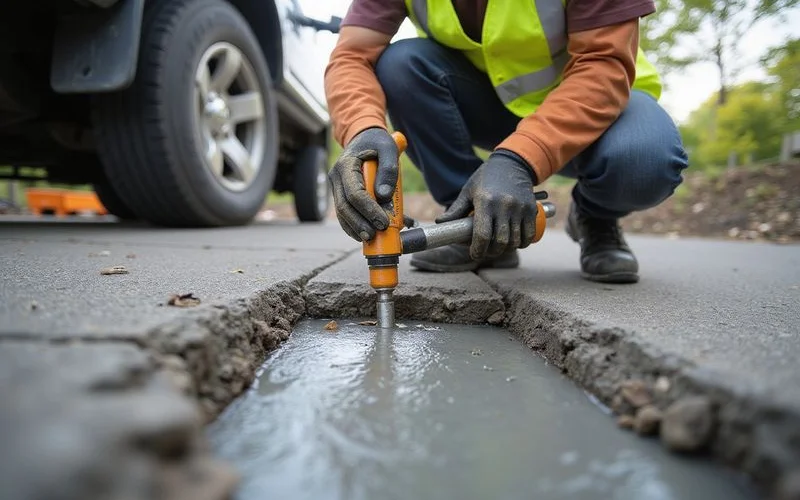
Our field teams start with a basic physical check. You can often spot the problem just by looking for pooling water or noticeably settling sections. A standard contractor trick is to drag a heavy chain or tap a hammer across the surface to listen for a hollow, drum-like echo.
For complex commercial projects or massive residential driveways, modern technology provides exact measurements. Ground Penetrating Radar (GPR) operates by emitting high-frequency electromagnetic radio pulses into the ground. When these pulses hit the boundary between solid concrete and an air void, the signal reflects back. According to 2026 industry standards, a high-frequency GPR antenna can penetrate 18 to 24 inches deep, easily distinguishing between a harmless buried utility pipe and a dangerous washout zone.
The complete detection process includes:
- Visual signs: We look for settling slabs, pooling rainwater, and listen for a hollow sound when the area is walked on or tapped.
- Mechanical Probing: We drill small, 3/8-inch ports and probe the dirt with calibrated rods to measure the exact void depth.
- Cross-checking: Taking measurements from multiple ports across the area helps confirm the outer boundaries of the settlement.
- GPR Scanning: Advanced radar maps the sub-surface environment without causing any damage to the existing structure.
Relationship between voids and visible settling
A sunken slab is simply the visual symptom, while the void underneath is the actual structural cause. Lifting the slab without filling that void leaves the concrete completely unsupported and guaranteed to settle again. Our repair process always includes inspecting for and filling these gaps during any leveling work.
Older methods like traditional mudjacking pump a heavy cement slurry into the ground, which can weigh up to 100 pounds per cubic foot. This extreme weight often compresses the already weak sub-soil, leading to a repeated cycle of sinking. Modern concrete lifting relies on high-density structural polyurethane foam, such as the HMI RR 201 system, which weighs a mere 2 to 4 pounds per cubic foot.
| Stabilization Method | Material Weight | Cure Time | Long-Term Durability |
|---|---|---|---|
| Traditional Mudjacking | 100+ lbs per cubic foot | 24 to 48 hours | Susceptible to moisture erosion |
| Polyurethane Foam | 2 to 4 lbs per cubic foot | 15 minutes | Waterproof and highly resistant |
The liquid resin expands up to 35 times its original volume, seeking out every hidden crevice and completely stabilizing the sub-grade. The foam cures to 90% strength in just 15 minutes, allowing you to drive your car back onto the driveway almost immediately. To learn more about the mechanics of the fix, see how void filling stops future settling and explore the specific details of our void filling service.
Getting ahead of a sinking slab protects your property value and your safety. Fixing voids under concrete is the only permanent solution.
Common Questions
Quick answers from our Metro Detroit crew.
Can I see voids without drilling?
Are voids common in Michigan?
Have a slab to lift? Let's take a look.
Free, no-obligation on-site estimate. If we can't fix it, you don't pay.