Signs Your Garage Floor Needs Leveling
Visible slope, water pooling, cracks at door threshold, door-seal failure — when to act on a sinking garage floor. Metro Detroit.
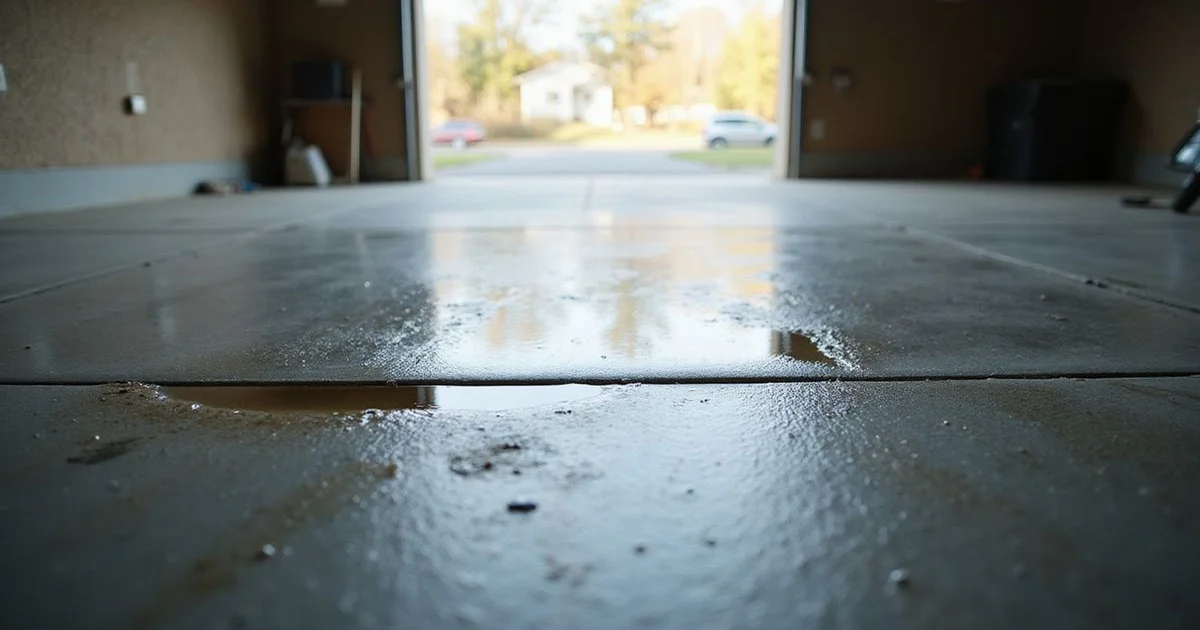
We at Concrete Leveling Detroit see a lot of sinking slabs across the state, but spotting the early signs your garage floor needs leveling often saves homeowners thousands of dollars.
Subtle changes in the concrete are usually the first warning of a failing foundation. Ignoring a sloping garage floor leads directly to expensive structural repairs and pest invasions.
Our team will outline exactly what to watch out for and explain the hidden costs behind these common warning signs. You will learn how to identify the specific type of settling happening in your property.
1. Visible slope toward the back
Garage floors are originally poured to slope toward the door so water drains out safely. If yours slopes the wrong way, the slab has definitely settled.
We always check the grade because the International Residential Code (IRC) Section R309.1 explicitly requires a slope toward the main vehicle entry. The standard US building code mandates a drop of about 1/8 inch per foot to safely move flammable car liquids and water outside.
A backward slope traps hazardous materials near your living space. You should immediately look for:
- Puddles forming near the interior drywall
- Oil stains creeping toward the house
- Musty smells indicating trapped moisture
Our concrete specialists frequently see this issue cause severe water damage to interior walls. The repair bills for that rot easily exceed standard leveling services.
2. Water pooling at the threshold
Snow melt, rain, or salt brine pools at the inside edge of the door exactly where it should never sit. This standing water accelerates the deterioration of your threshold and nearby hardware.
We find that continuous exposure to moisture quickly rusts out the metal tracks holding your door in place. Recent 2025 data from HomeAdvisor shows average garage door repairs cost about $264 across the US. Those fees often stem directly from hardware destroyed by persistent pooling water.
Here is a quick look at how water damage expenses add up:
| Damaged Component | Typical US Repair Cost |
|---|---|
| Bottom Weather Seal | $100 to $300 |
| Rusted Track Replacement | $150 to $400 |
| Fixing the Sinking Slab | Prevents all future damage |
Our team recommends addressing the grade before paying to fix the ruined weatherstripping. Putting a brand new seal on a sunken concrete floor is a complete waste of cash. The water will just gather again and rot the new rubber within a few months.
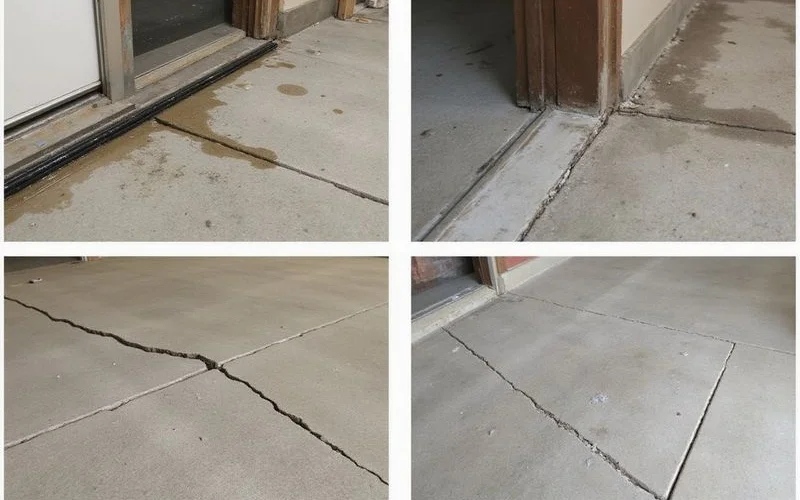
3. Cracks across the door threshold
Settlement near the door creates tension in the slab, causing cracks to form parallel to the threshold. These specific fissures are a massive red flag indicating the dirt beneath your floor has washed away.
We measure the width of these cracks to determine the severity of the hidden void underneath. Concrete easily supports heavy trucks through compression, but it snaps quickly under bending tension. A fracture running the length of your garage entrance means the slab is literally hanging in mid-air.
Pro-Tip: You can test the severity of the gap by tapping a heavy broom handle on the concrete near the crack. A hollow, drumming sound confirms a dangerous void exists right below the surface.
Our technicians always inject support material into these exact spots to stop the concrete from breaking further. Fixing the drop immediately keeps the tension from spreading deeper into the main floor area.
4. Door seal failure
Light visible under the closed door means the threshold dropped below the door’s seal line. Drafts, freezing salt water, and destructive pests will rapidly follow this gap into your home.
We frequently see homeowners try to fix this by stuffing extra rubber under the track. This temporary fix fails because common mice only need an opening the size of a dime to squeeze inside. Recent pest control data from 2025 confirms that poorly sealed garages act as the primary entry point for house rodents.
An unlevel door seal invites several costly problems:
- Mice chewing through expensive car wiring
- Spiders multiplying in cluttered storage boxes
- Freezing drafts spiking your winter heating bills
Our restoration experts know that leveling the concrete provides a permanent fix for these exact issues. A perfectly flush threshold creates an impenetrable barrier that keeps the outside elements where they belong.
5. Floor depth dropping near walls
Garage floor settling at the perimeter is often the first visible sign of trouble before the main threshold drops. You will notice a growing gap between the bottom of your drywall and the concrete slab itself.
We inspect these exterior wall lines carefully because they reveal exactly how much supporting soil has eroded. Most residential US garages sit on a standard five-inch crushed stone base. Poor gutter drainage outside the building easily washes this gravel away from the edges over a few rainy seasons.
Warning: Check the bottom edge of your drywall for soft spots. A dropping floor often exposes the untreated wall materials to ground moisture, leading to fast-spreading mold.
Our crews use high-density leveling injections to pack these washed-out perimeter zones tightly. Checking the edges of your room every spring helps you catch the sinking action before it gets expensive. Stopping the drop at the walls saves the center of your floor from a massive structural break.
When to call vs. monitor
Deciding whether to call a professional or simply monitor the situation depends heavily on the size of the gaps. Taking quick action on severe symptoms prevents the entire slab from needing a full replacement.
We strongly advise that you follow these guidelines when checking your concrete gaps:
- Call now: Visible water pooling, door seal failure, multiple cracks
- Monitor: Hairline cracks, very minor slope (under 1/4 inch over 10 feet)
Most structural cases worsen rapidly with each freezing Michigan winter. Water gets trapped under the slab, and it expands by nine percent when it turns into solid ice. This freeze-thaw cycle pushes the concrete up and then drops it down, creating a much larger void by spring. Calling earlier always means cheaper, faster work.
Our detailed service breakdowns are available on our garage floor leveling page and our comprehensive void filling guide.
Request a free estimate to get a precise evaluation of your property today.
Common Questions
Quick answers from our Metro Detroit crew.
Can a garage floor be leveled with a car parked nearby?
Why is my door seal failing?
Have a slab to lift? Let's take a look.
Free, no-obligation on-site estimate. If we can't fix it, you don't pay.